

How to Read OBD2 Scanner Results: Codes, Freeze Frame and Readiness
Read a scan in the right order: status screen, code lists, the five-character code, freeze frame and readiness monitors, then diagnose before you clear anything.
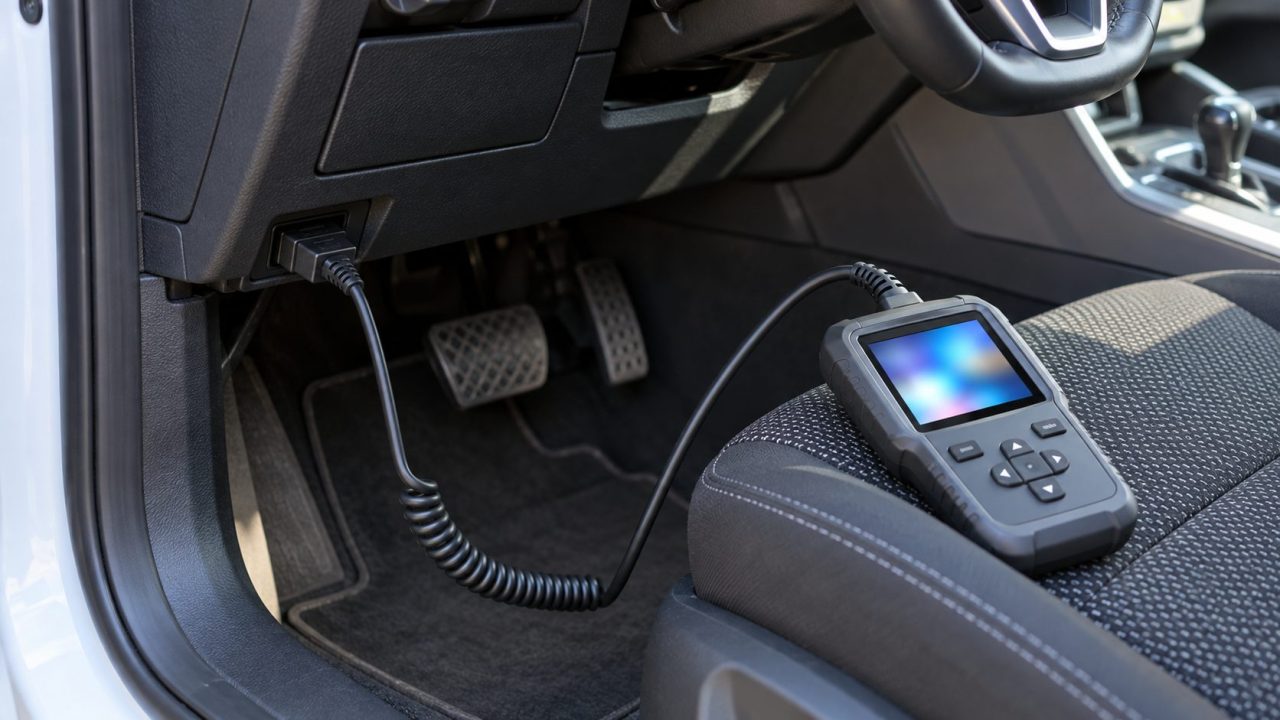
Your scan tool filled the screen with codes and monitor counts, and none of it says what to fix. Learning how to read OBD2 scanner results is mostly about order: the status screen, the code’s list, the code itself, the freeze frame, readiness, and only then a diagnosis.
How to read OBD2 scanner results, in short: plug in with the ignition off, then key on, engine off. Work through the status screen, each code and its list, freeze frame and readiness, and find the cause before clearing anything.
Step 1: How to Read OBD2 Scanner Screens, Key On and Engine Off
The 16-pin port usually sits under the dash on the driver’s side, near the steering column; on some Asian and European cars it’s behind the ashtray or a panel. Plug and unplug with the ignition off. To read, switch it on without starting the engine.
The check engine light (MIL) coming on now is a bulb check and should go out once the engine runs, unless a fault keeps it on. On some cars, a brief blink here just flags incomplete monitors. Meaningful live data needs the engine running: do that outdoors, never in a closed garage, because exhaust gas is poisonous.
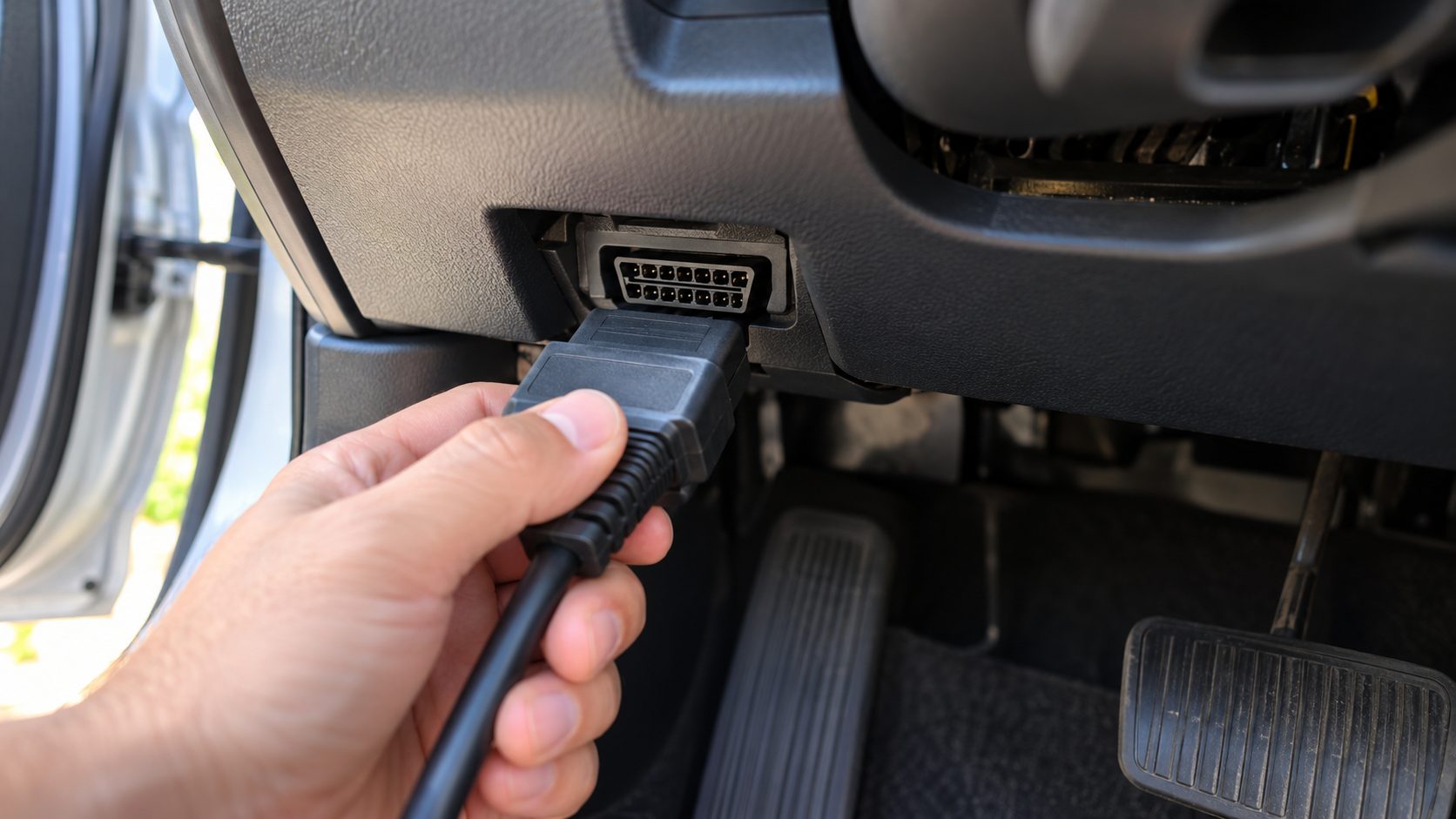
Most tools open on a summary; in Autel’s AL619 manual it’s System Status: MIL ON or OFF, Codes Found, and monitor counts at OK, INC or N/A. If engine and transmission modules both answer, pick one.
Part of learning how to read OBD2 scanner output is trusting this screen: “MIL OFF” with codes found is normal for pending codes or a stored code whose light went out. Scanner won’t connect? See our OBD2 scanner not connecting fixes.
Step 2: Stored, Pending or Permanent? Find the Code’s List
Knowing how to read OBD2 scanner codes starts with the list each one is on. Under California’s rules, a pending code is typically stored within 10 seconds of a fault. Seen again on the next drive cycle in which that test runs, it becomes confirmed and lights the MIL; misfire and fuel faults have their own timing.
Stored
Turns the check engine light on. The light typically goes out after three clean drive cycles, but the code stays for at least 40 warm-ups.
Pending
Seen on the current or last drive cycle, no light yet. Clears itself if the fault doesn’t return; it doesn’t prove a part failed.
Permanent
Newer cars only (roughly 2010 on), and cheap readers may not show it. No scan tool or battery disconnect erases it; the car deletes it once its monitor sees the fault is gone.
Step 3: How to Read OBD2 Scanner Codes Like P0303
A standard OBD2 code has five characters (newer and enhanced tools may add a suffix after a dash). Learn each position and you know how to read OBD2 scanner codes on any car, at least the generic ones. Take P0303:
| Position | What it tells you | In P0303 |
|---|---|---|
| 1st (letter) | System: P powertrain, B body, C chassis, U network | P: powertrain |
| 2nd | Generic (SAE) or maker-specific (see below) | 0: generic |
| 3rd | Subsystem, 0-9 or A-F | 3: ignition or misfire |
| 4th and 5th | The specific fault | 03: cylinder 3 |
So P0303 is a misfire in cylinder 3. On P0 codes, the third character groups faults: 0-2 fuel, air and injectors; 3 ignition and misfire; 4 auxiliary emission controls; 5 speed and idle; 6 computer circuits; 7-9 transmission; letters mostly hybrid systems.
Generic or maker code? As a rule of thumb, P0, P2, P34-P39, B0, B3, C0, C3, U0 and U3 are generic (SAE J2012) and mean the same on every car, though a basic scanner may still not read B and C codes. P1, P30-P33, B1, B2, C1, C2, U1 and U2 are manufacturer codes and need the make’s definition.
Step 4: Check the Freeze Frame From the Moment the Code Set
Freeze frame records conditions when an emissions fault set: typically RPM, speed, airflow, engine load, fuel pressure and trims, coolant temperature, timing advance and closed-loop status. There’s usually one frame, for the first or highest-priority fault; newer J1979-2 cars can keep two per code.
Here’s how to read OBD2 scanner data in a freeze frame: coolant temperature shows a cold or warm engine; RPM, speed and load show idle, cruising or acceleration. Recreate that on a legal, safe test drive, with the cable clear of the pedals and a passenger watching the screen (or check after you park), then recheck the pending list. Photograph the frame first: clearing erases it.
Step 5: How to Read OBD2 Scanner Readiness Monitors (OK, INC, N/A)
Readiness monitors are the engine computer’s emission self-tests; Autel’s manual lists 11 EPA-defined ones across gas and diesel engines, and not every car has all of them. OK (Ready) means the test ran, INC (Not Ready) means it hasn’t finished, and N/A means the car lacks it.
Misfire, fuel system and comprehensive components run continuously and always show ready. The rest, such as catalyst, EVAP, oxygen sensor and EGR, wait for the right conditions.
INC isn’t a fault, but it can fail inspection
Monitors reset after a code clear, a repair, or a dead or disconnected battery; Autel advises mixed highway and stop-and-go driving with at least one overnight off. In California, the Bureau of Automotive Repair passes a 2000-or-newer gas car with only EVAP incomplete but can fail a 2010-or-newer car holding a permanent code. Check your local test rules.
Buying used? Knowing how to read OBD2 scanner results can expose a recent reset: a dark light with several INC monitors can mean codes were just cleared or the battery disconnected. On newer cars, so can a permanent code with the light off, or a low “distance since codes cleared” reading.
Step 6: Diagnose the Cause Before You Clear Anything
Blinking while you drive means an active fault, such as a misfire, that could damage the catalytic converter. Avoid high speed and heavy loads and get it checked right away; if it keeps flashing or the engine runs rough, stop safely and have it towed.
Record everything
Photograph every code, its list and the freeze frame first.
Get the exact meaning
Generic codes: the tool’s built-in list. Manufacturer codes: pick your make, or use its service information.
Check the cheap stuff
A loose gas cap can set the light. Then check connectors, wiring and hoses in that system.
Fix the cause
Knowing how to read OBD2 scanner codes tells you where to look, not which part failed.
Verify the repair
Rescan after a few days of driving: no pending codes, monitors turning OK.

Clearing isn’t part of how to read OBD2 scanner results: it erases them, plus freeze frame and manufacturer data, and resets non-continuous monitors to INC. A fault that remains brings the code back, and permanent codes stay until the car clears them. Clear only with the key on, engine off.
What a Basic Scanner Can’t Read: ABS, Airbag, Transmission and Mileage
Generic OBD-II data, required on US cars and light trucks since 1996, is mostly emissions-related. Anything else is manufacturer-specific, as OBDLink explains. Knowing how to read OBD2 scanner screens won’t help when the data isn’t there:
- ABS, airbag and tire-pressure codes. OEM-specific, so they need an enhanced tool, often with a separate ABS/SRS function. Coverage varies by make, year, tool and region.
- Transmission codes. Some appear as generic P07xx-P09xx codes; many others need make-specific access to the transmission module.
- Transmission temperature. Not a standard OBD-II reading, so you need enhanced live data for your make; Toyota, for one, calls it A/T Oil Temperature 1.
- Mileage. Under California’s OBD II rules, which most US-market cars meet, 2005-and-newer CAN cars report distance with the light on and since codes were cleared; 2021-and-newer cars (some from 2019) also report the odometer, if your tool shows it. Elsewhere, don’t assume it.
- Newer cars on SAE J1979-2. It’s required on US-market cars from model year 2027, and some use it from 2023. Older scanners and apps may need an update or may not read them; rules elsewhere differ.
How to Read OBD2 Scanner Results: FAQ
Should the engine be running when I read an OBD2 scanner?
It doesn’t need to be: key on, engine off covers codes, freeze frame, readiness and erasing. Some tools and hybrids want the engine running or Ready mode on; for live data, run it outdoors.
Why does my scanner show a code with the check engine light off?
This trips up a lot of people learning how to read OBD2 scanner results. It may be pending, a confirmed code whose fault went away (codes outlast the light), or a code from ABS or another module with its own warning light.
Why can’t my scanner read ABS, airbag or transmission codes?
A basic reader speaks only generic OBD2, mostly emissions-related powertrain data. ABS, airbag (SRS) and many transmission codes are maker-specific, so you need an enhanced tool or app that supports your make.
Read the Whole Scan, Then Fix the Cause
That’s how to read OBD2 scanner results without guessing: status, code list, code, freeze frame, readiness, diagnosis. Clear only after the repair.
More fixes are in our cars and tech guides. Driving electric? Our EV charging time guide explains why charging can run long.


Leave a comment