

EV Charging Best Practices for a Longer-Lasting Battery
Charge to 80% or 100%? It depends on your battery chemistry. Here is what Chevrolet, Polestar and Tesla advise, with the reason behind each habit.
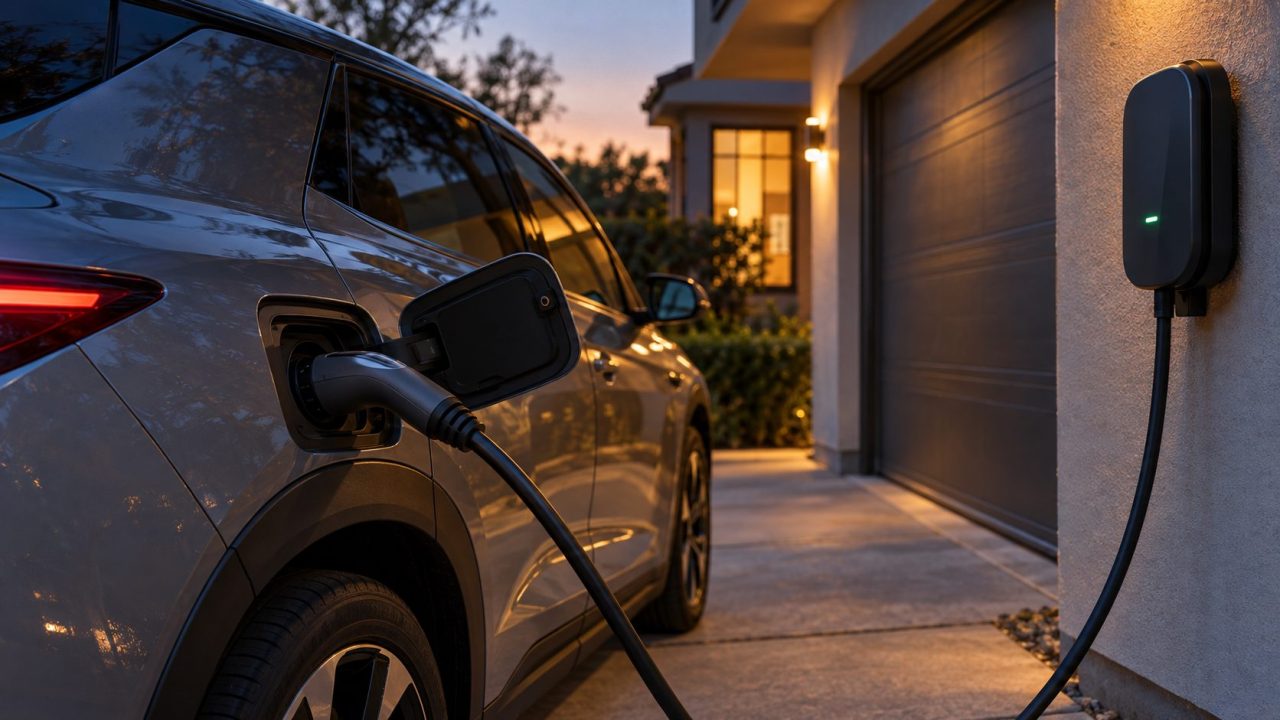
Most EV charging best practices come down to two habits: don’t leave the battery sitting full for long, or sitting near empty. But “charge to 80%” isn’t a universal rule. Some makers tell owners of certain battery types to charge to 100% regularly, so first find out which pack your car has.
In short: plug in most nights, keep your manual’s daily limit, and save DC fast charging for trips. Here are those EV charging best practices with the reasons.
EV Charging Best Practices Start With Your Battery Type
Nickel-based pack (NMC or NCA): set a daily limit below 100%, often around 80%, and charge to full only for long trips. Lithium iron phosphate (LFP) pack: your maker may want 100% regularly. Where any of these EV charging best practices conflicts with the charging guidelines in your owner’s manual, the manual wins.
Chemistry can change within one model by trim, year or region, and some manuals cover both packs in one book. So confirm the pack in your own car; the dealer can check it against your VIN. On a Tesla, Controls > Charging shows your car’s recommended daily and trip limits.
Here are the main EV charging best practices side by side:
| Habit | Nickel-based (NMC, NCA) | LFP | Maker example |
|---|---|---|---|
| Everyday limit | Below 100%, often 80% | 100% if the maker says so | Tesla: use the daily limit under Controls > Charging |
| Charging to 100% | Trips that need it | Regularly, per the manual | Chevrolet: 80% for Blazer, Equinox, Silverado EV; 100% for the 2027 Bolt |
| Sitting at 100% | Avoid | Fine if the manual says so | Polestar: don’t leave it charging above the recommended level |
| Near 0% | Avoid | Avoid | Tesla: 0% can damage parts such as the low-voltage battery |
| DC fast charging | Trips | Trips | Polestar: AC is gentler for regular charging |
EV Charging Best Practices for Nickel-Based Packs: A Daily Limit Near 80%
Chevrolet’s charging page recommends charging the Blazer EV, Equinox EV and Silverado EV to 80%, which it says helps battery health and regenerative braking. The Polestar 2 manual gives the reason: holding a very high charge for a long time can damage the battery, so go to 100% only when a trip needs the full range.
Add Polestar’s advice to charge whenever the level drops below 20%, and you get the familiar 20-80% routine. Tesla says the same for cars whose recommended daily limit is 80%: keep it there and save 100% for long drives. Set the limit once and leave it.
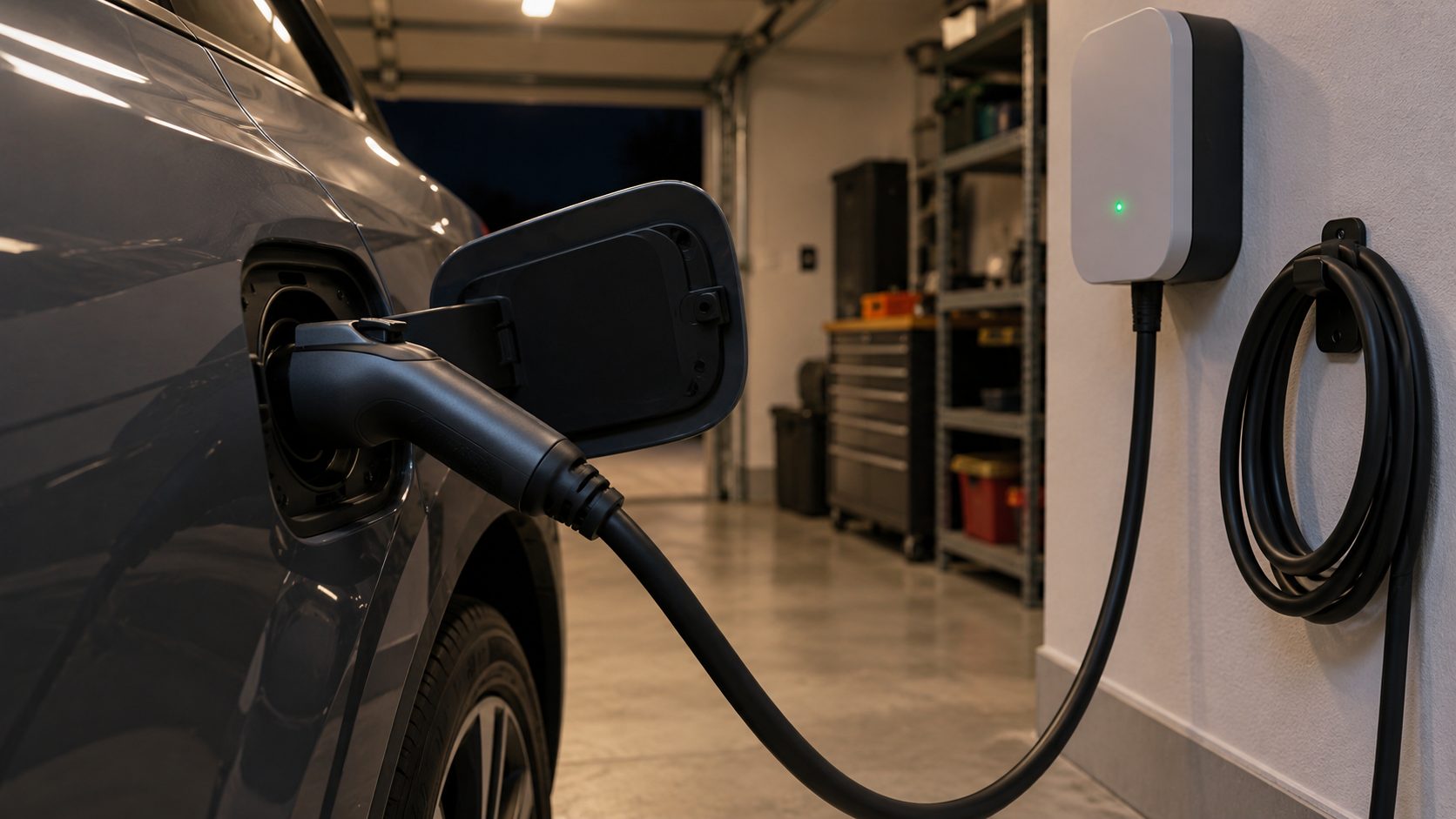
When a trip needs 100%, time it. Recurrent, an independent battery-data firm, says leaving a car fully charged is worse than charging to 100% and then driving. Set a charge timer (on a Tesla, the Schedule settings) so it finishes just before you leave. For home setups, see EV charging at home.
Why Some Makers Tell LFP Owners to Charge to 100%
This is where one-size-fits-all lists of EV charging best practices go wrong. The same Chevrolet page tells 2027 Bolt owners to charge to 100% regularly because of its new battery technology, which keeps the range display accurate and helps the car reach its fastest DC charging speeds. The page doesn’t name the chemistry.
Recurrent says some LFP makers, Tesla among them, recommend periodic full charges so the battery management system can recalibrate its range estimate. Tesla’s current Model 3 manual lists no separate LFP limit; it points owners to the daily limit on the car’s charging screen.
Chevrolet: 80% for the Equinox EV, 100% for the 2027 Bolt. So a daily 100% habit is right when your manual asks for it, and the worse choice when it says 80%.
Don’t Leave the Car Sitting at 100% or Near 0%
At the top end, Polestar says not to leave the car charging above the recommended level on its center display. For nickel-based packs, a full battery you drive on soon is fine; one parked at 100% for days is the habit to drop. LFP owners whose manual asks for 100% can skip this.
The bottom end is riskier. Tesla’s Model 3 owner’s manual says a battery run down to 0% may damage other parts, such as the low-voltage battery, and the warranty won’t cover it. Near empty, a low-power mode stops supporting that battery, so plug in right away to avoid a jump start and a replacement. Polestar adds that a low battery left unplugged can self-discharge to 0%, which can seriously damage the pack if it isn’t recharged.
The fix for both ends is to charge little and often. Tesla calls keeping the car plugged in when parked the most important way to preserve the battery. Of all the EV charging best practices here, this one takes the least effort.
Fast Charging and Hot Weather: Keep DC for Trips, Park Plugged In
Polestar calls AC charging gentler on the battery than DC fast charging, especially for regular charging. Tesla says to charge at Level 1 or Level 2 whenever possible and save Supercharging for road trips.
Don’t read these EV charging best practices as a ban on fast charging. In data on about 13,000 US Teslas, Recurrent found no statistically significant difference in range loss between frequent and rare fast chargers, adding “at least not yet” because the cars are young. Speed drops near the end as the car limits power; our EV charging time guide explains why.
Heat needs more care. Recurrent says faster charging makes more heat and advises avoiding it in extremes such as direct sun or peak temperatures, so pick a shaded charger or a cooler hour when you can.
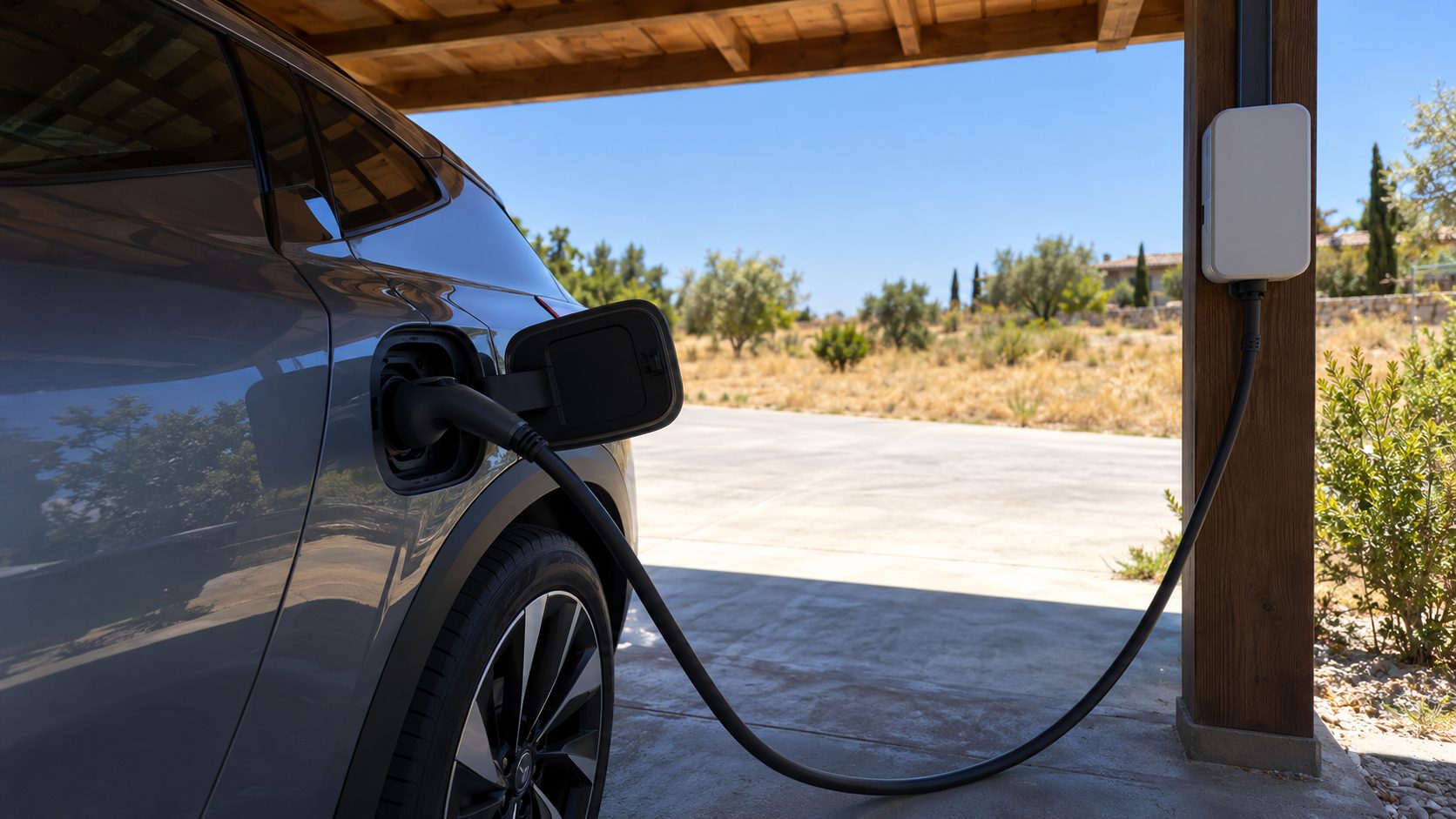
Hot-weather EV charging best practices are mostly about parking, though. Polestar advises keeping the car plugged in above 86°F (30°C) where possible, so it can cool its battery without draining it. Park in shade, and avoid parking for over 24 hours where it may reach about 131°F (55°C).
Precondition in Cold Weather Before Driving and Fast Charging
Cold-weather EV charging best practices come down to warming the battery on grid power. Polestar says reduced performance in the cold is temporary and harmless, but recommends preconditioning while plugged in, so the car heats the battery before you drive without losing range. Tesla gives the same advice.
Cold also slows charging, since part of the current goes to heating the battery. Before a winter fast charge, set the charger as your navigation destination; many newer EVs then warm the battery on the way. Polestar uses Google Maps for this, and Tesla uses Trip Planner where available.
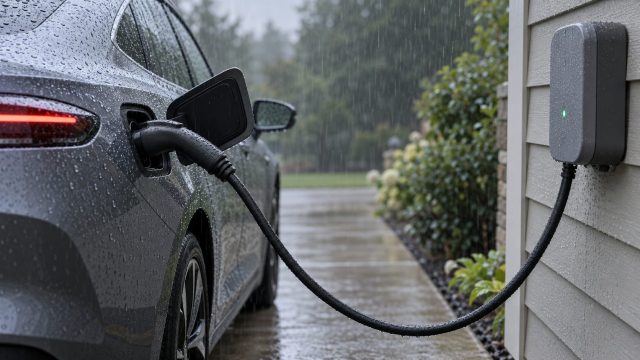
At home, leave the car plugged in so it can use wall power for warmth; Polestar says to plug in if it will sit over 24 hours below -22°F (-30°C). Wet evenings are no reason to skip it; our guide to EV charging in the rain lists what to check first.
Parking for Weeks: Storage Levels and Other EV Charging Tips
Long absences need their own EV charging best practices, because high charge and slow self-discharge both have time to work. The Polestar 2 battery recommendations make a good template, but treat the numbers as one maker’s:
- Over a month: Polestar recommends a charge level of 40-60%. Tesla’s Model 3 manual says about 50%, plugged in if possible.
- Over three months: keep the car connected to charging and check the charge level regularly.
- Unplugged at an airport: Tesla says a parked Model 3 can lose about 1% a day, varying with weather and settings, so leave enough for the trip.
Public charger etiquette: move the car once it’s done, and hang the connector back on its holder.
EV Charging Questions: Quick Answers
Should I charge my EV to 80% or 100% every day?
It depends on the pack. Chevrolet says 80% for its Blazer, Equinox and Silverado EV, but regular 100% charges for the 2027 Bolt. On a Tesla, use the daily limit under Controls > Charging.
Is it bad to charge my electric car every night?
No. Tesla’s manual says the battery performs best when charged regularly. Nightly charging with the right limit set is one of the simplest EV charging best practices.
Does DC fast charging damage an EV battery?
Occasional trip use is fine. Recurrent’s Tesla data shows no significant extra range loss from frequent fast charging so far, but for daily charging Polestar and Tesla both recommend AC.
How do I know which EV charging best practices apply to my battery?
Ask the dealer to confirm the pack from your VIN, since the model name alone can’t tell you. Then follow your manual’s advice for that pack.
When Advice Conflicts, Your Owner’s Manual Wins
The core EV charging best practices fit in one line: charge regularly with a sensible limit, save 100% for trips unless your manual asks for it, never let the car sit near empty, and help the battery in heat and cold.
Revisit these EV charging best practices when you change cars, and browse our cars and tech guides.
Leave a comment