

EV Charging in the Rain: Is It Safe, and What Actually Matters
Cars and chargers are built for rain, and the pins stay dead until the car and charger finish a handshake. The real risks: damaged cords, wet pins, floods, lightning.
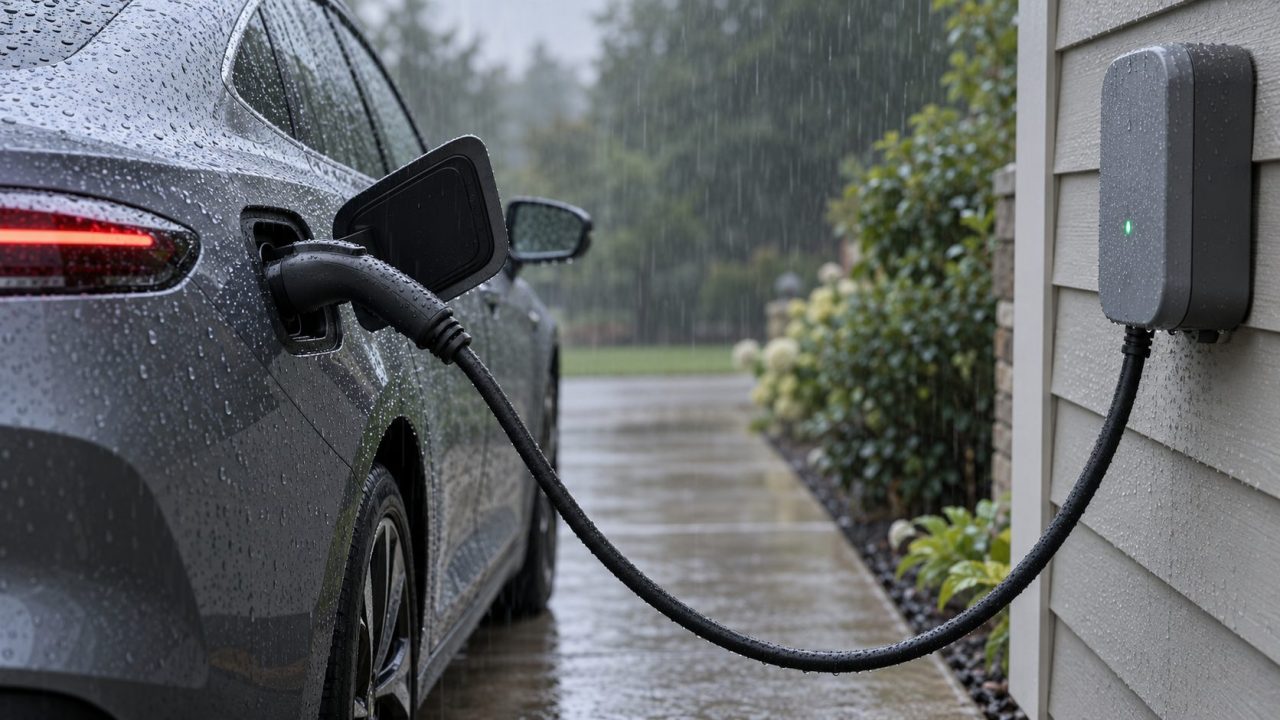
EV charging in the rain is something your car, cable and charger are built for, at a public station or at home with outdoor-rated equipment. The real risks are narrower, and each has a quick check.
Is EV Charging in the Rain Safe? What Official Guidance Says
Yes, in ordinary rain. Cars and chargers are designed for EV charging in the rain: the DOE and EPA’s charging FAQ on fueleconomy.gov says both are designed to prevent electrical shock, even in rainy conditions. The DOE’s Alternative Fuels Data Center says the same for outdoor-rated home equipment. “Designed to prevent” isn’t a zero-risk promise, though.
Don’t plug in with standing water around the car or connector, a submerged or snow-covered outlet, a damaged cable or wet pins. Stop before lightning arrives, and get a flood-damaged EV inspected first.
What the Charging Handshake Protects, and What It Doesn’t
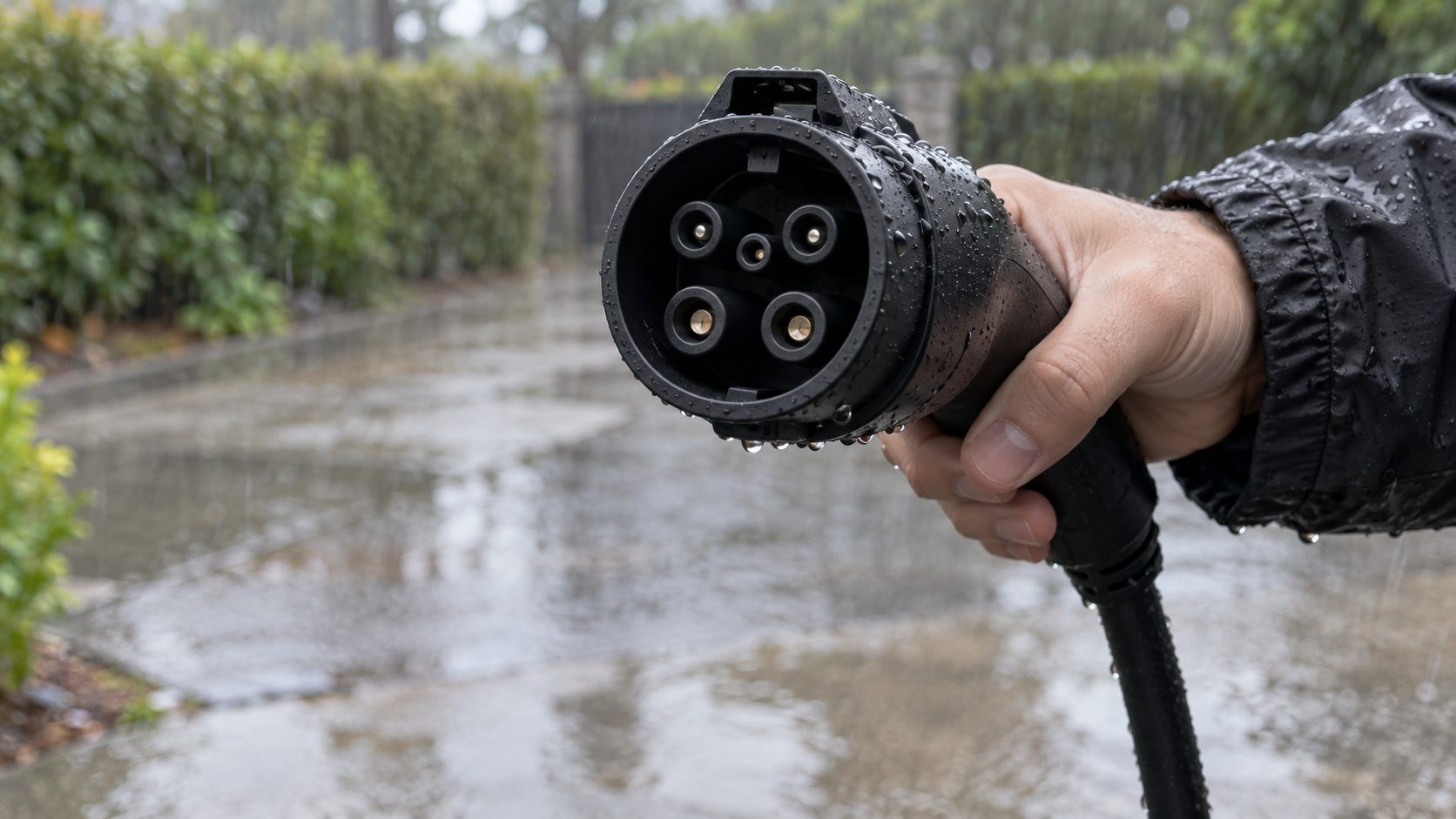
A J1772 connector, North America’s long-standing AC plug, stays dead until the car asks for power; the newer NACS (SAE J3400) plug uses the same signaling for AC. A 2014 DOE-hosted PNNL presentation shows how:
Nothing plugged in
Only a +12 V DC signal sits on the low-voltage pilot line; the contactor that switches current is open.
Plug seated
The pilot becomes a 1 kHz square wave whose pulse width sets the car’s maximum current. The contactor stays open.
Contactor closes
Only when the car requests a charge does current flow.
For EV charging in the rain, that protects an unplugged connector, not a wet one: once the car asks for power, wet pins are live. Ground-fault protection is the backstop, and water inside the pins is still a reason to stop.
That’s the AC sequence; outside North America, IEC 61851-1 is the counterpart. DC fast chargers add a digital handshake (over the same pilot pin on CCS and NACS) and test the cable’s insulation before switching on high voltage; a low reading stops the session.
What Type 3R, Type 4X, IP54 and IP55 actually cover
Ratings vary even within one brand: Tesla lists Type 3R and IP54 for its North American J1772 Wall Connector, IP55 for the European version and Type 4X for its Gen 3 Mobile Connector.
Type 3R covers falling rain, sleet and snow; IP54, splashing from any direction; IP55, low-pressure water jets too; Type 4X, hose-directed water and corrosion. None covers submersion, and all assume a correct installation.
For EV charging in the rain, check your own unit’s label. A rating doesn’t override the maker’s warnings: Tesla still rules out severe rain, snow and electrical storms for the Type 4X Mobile Connector.
Before You Plug In: Check the EV Charging Cord and Connector
Nissan’s 2025 LEAF manual (Europe) says not to charge with water trapped in the port, and Kia’s 2024 EV6 manual (US) goes further: don’t charge when the connector and plug are wet. Before EV charging in the rain, check:
- The cable jacket. Cracks, fraying or crushed spots mean stop; Tesla and Kia both say not to use a damaged cable.
- The connector face and inlet. Water or debris around the pins? Shake it out or wipe it dry; if it won’t dry, don’t charge.
- The drainage hole. Nissan says not to charge if the port’s drain is blocked.
- Your hands and feet. Kia says not to touch the connector with wet hands or while standing in water or snow.
- After charging. Close the port cap and hang the connector pointing down, with its rubber cover on if it has one, as charger maker GARO recommends.
EV Charging During a Thunderstorm: Stop Before It Arrives
Plain EV charging in the rain has a clear answer; lightning doesn’t. Kia says not to charge when lightning is possible, Nissan says not to touch the car or charger during lightning, and GARO says to unplug and stop, since a strike can still damage the charger and car despite surge protection.
The National Weather Service agrees typical surge protectors won’t stop a strike, but warns against unplugging mid-storm because you could be struck. Here’s how we reconcile the two (our reading, not an official rule; your manuals come first):
- Storm on the way: stop the session on the car’s screen or in the charger’s app and wait until it shows charging has ended. Then unplug at the car, and at the wall last for a plug-in cord (Tesla warns against pulling its cord from the outlet mid-charge).
- Thunder close or lightning overhead: stay inside, out of an open garage or carport, and leave the car and charger alone. Don’t go out to unplug.
Using an Outdoor EV Charging Outlet in Wet Weather
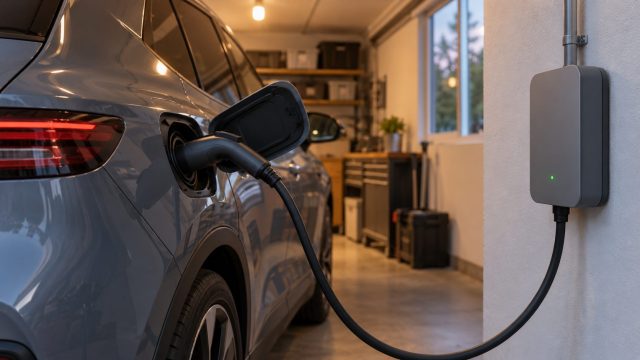
For EV charging in the rain on a Level 1 cord, the household outlet needs the most protection. Tesla’s manual says not to let rain run along the cable into the outlet or charge port.
- Drip loop. Let the cable dip below the outlet before turning toward the car, so water drips off at the low point.
- Height and spot. Tesla says to keep its Mobile Connector 18 in (46 cm) or more above the floor (a garage-vapor rule that also keeps it off wet ground) and out of recessed or below-floor spots. Outdoors, keep any control box clear of pooling water and sprinklers.
- Flooded or snow-covered outlets. Never plug in. If one floods with the cord already in, Tesla says to turn off the breaker before unplugging, but only if you can reach the panel without standing in water.
- Outdoor-rated gear. Use a weatherproof while-in-use cover and a ground-fault-protected outlet, as local code requires, and never an extension cord. If the outlet lacks either, have an electrician fix it first; our guide to EV charging at home covers the options.
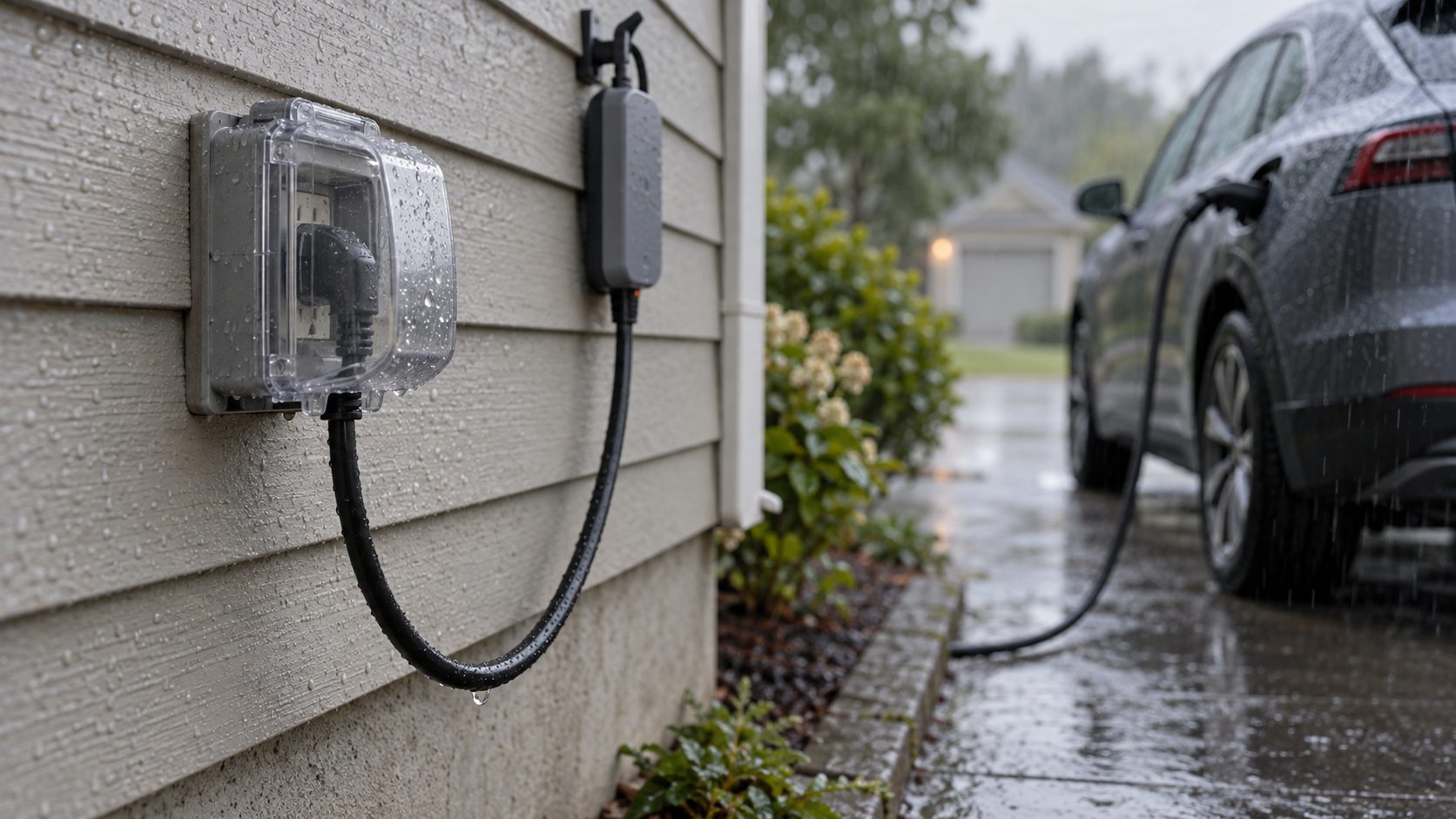
Use a dedicated weatherproof outlet with RCD protection, installed to local rules by a licensed electrician; avoid travel adapters and extension leads. In the UK, Electrical Safety First says EV-rated 13 A sockets are marked BS1363/EV and belong on dedicated circuits. Check council rules before running a cable across a pavement; where allowed, ESF says covers should be anti-slip and brightly colored.
Standing Water and Flood-Damaged EVs: When Not to Charge
Safe EV charging in the rain assumes water is falling on the equipment, not pooling around it. If the car, connector or your feet are in standing water, don’t plug in; at a flooded public bay, use another stall.
Notify your local fire department first, as the US Fire Administration’s flooded-battery handout advises. Don’t wade in to unplug anything: cut the charger’s breaker only if you can reach the panel without standing in water; otherwise leave it to firefighters or an electrician.
Have the car towed out, not driven, and keep it 50 feet (about 15 m) from combustibles and structures. Move away if the battery smokes, pops or hisses. Don’t charge or drive it until a qualified technician has inspected it.
Charging Stopped or the Breaker Tripped in the Rain
When a charger quits during EV charging in the rain, that’s usually its protection doing its job. Tesla’s manual defines a ground-fault stop as current leaking through a potentially unsafe path.
Ground fault: dry the connector and replug once, or try another outlet or stall; if it persists, call service or report it. Ground loss: the outlet isn’t properly grounded, so call an electrician.
Breaker or GFCI tripping after rain: reset it once at most. A repeat trip suggests water in the outlet or wiring; leave it off for an electrician.
Quick Answers on EV Charging in the Rain
Is a public DC fast charger safe in heavy rain?
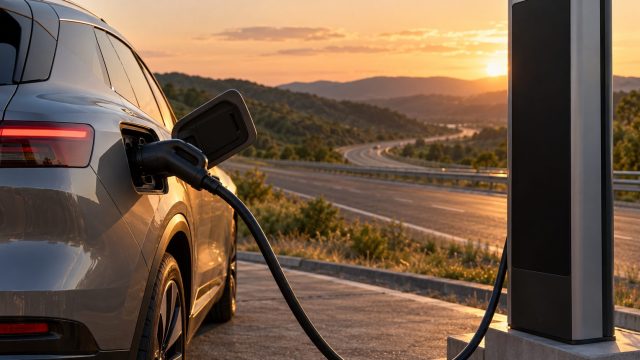
Generally, yes. The DOE and EPA answer covers public stations too, so EV charging in the rain at a fast charger needs the same checks: an intact cable, a dry connector face, no deep water and no lightning nearby.
Should I cover the charger or the car?
Not normally. Outdoor-rated gear is built for EV charging in the rain, and the DOE’s Plug-In Electric Vehicle Handbook for Electrical Contractors says shelter isn’t typically required for it. Nissan also says not to charge with a car body cover fitted.
What if water gets into the charging port?
Don’t plug in yet. Drops on the handle are normal during EV charging in the rain; water sitting between the pins isn’t. Shake or wipe it out, clear the drainage hole and let it dry. If water keeps collecting, have the dealer check the port.
EV Charging in the Rain: Routine, Not Risk-Free
The pins stay dead until the handshake finishes, and ground-fault protection watches every session. Most EV charging in the rain needs only five quick checks from you: an undamaged cable, a dry connector face, outdoor-rated gear at the outlet, no standing water, and stopping before a storm.
Timing a top-up before the weather turns? Our EV charging time guide helps you estimate it; the car tech section has more.
Leave a comment