

TPMS Light Won’t Turn Off? Reset, Relearn and New-Tire Fixes
Tires filled but the lamp stays on, or keeps coming back on cold mornings? Gauge them cold, give the system a drive, then reset, calibrate or relearn, in that order.
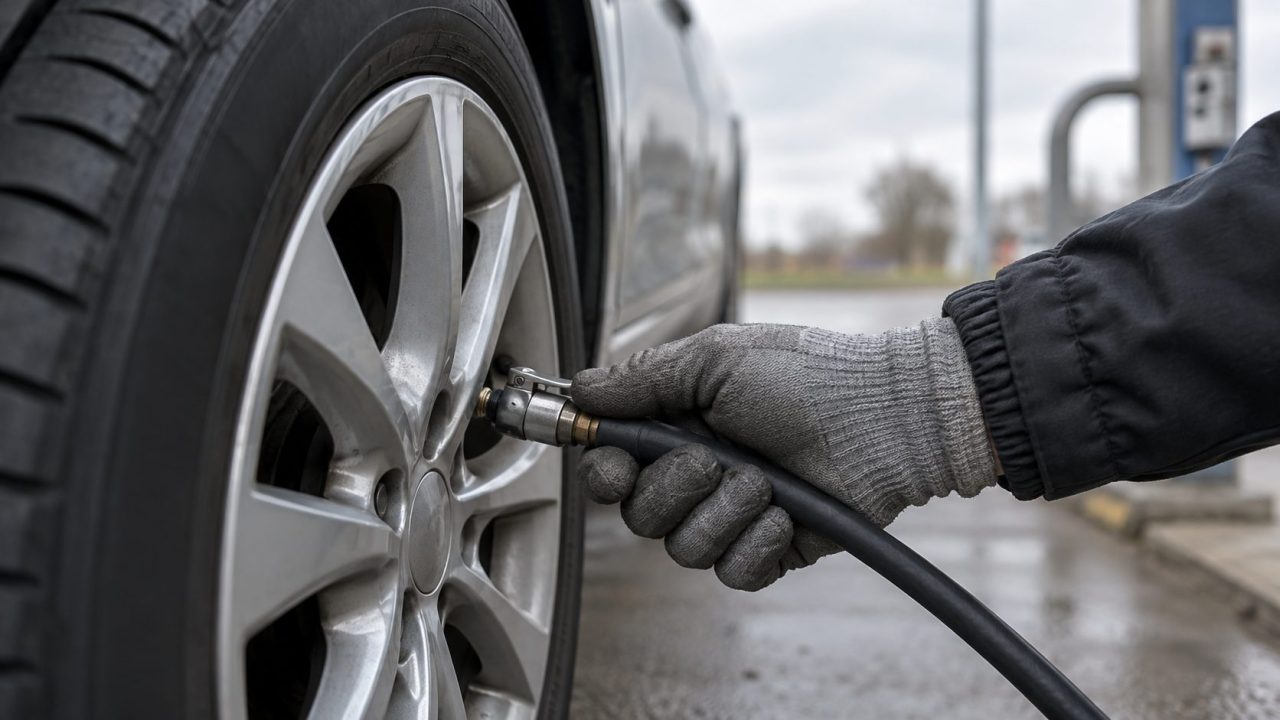
When your TPMS light won’t turn off after you’ve added air, a tire is usually still low, the car is on a compact spare, the system needs more driving, or it needs a reset or relearn. Steps vary by car, so the Toyota, Honda and GM ones below are examples; your owner’s manual has yours.
TPMS Light Won’t Turn Off? First Check Whether It’s Solid or Flashing
Restart the car and watch the lamp for 90 seconds.
Solid from the start
If the TPMS light won’t turn off and never flashes, the system still sees a low tire or hasn’t caught up with the air you added. Start at step 1.
Flashes, then stays on
In the US, a combined lamp that flashes for 60 to 90 seconds, then stays lit, signals a system fault. See our TPMS light flashing guide.
On when cold, off later
A tire sits just under the threshold on cold starts. Jump to the on-and-off section.
Driving on a compact spare
Toyota says the 2025 Camry’s compact spare has no sensor, so the TPMS light won’t turn off until the repaired tire is back on. On Honda’s system, a compact spare can trigger the lamp and blocks calibration.
Direct TPMS reads each tire with a wheel sensor; indirect TPMS infers pressure from ABS wheel-speed data. Our TPMS light vs tire pressure light guide explains both.
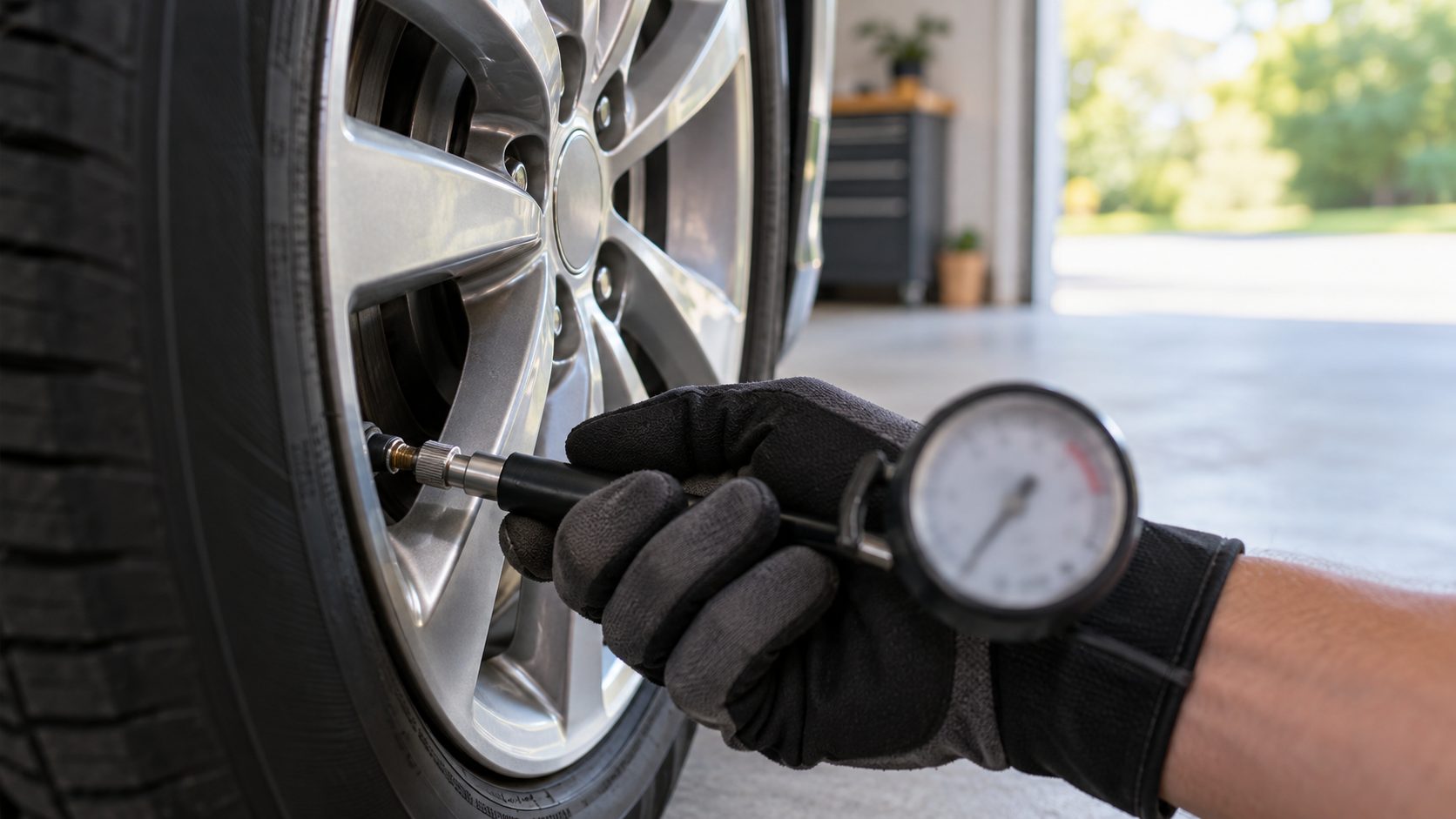
Step 1: Gauge Every Tire Cold, Including a Monitored Spare
Trust a good gauge over the dash. Continental Tire calls tires cold after three hours parked or less than a mile of driving, and prefers dial or digital gauges to pencil types. Fill to the door-jamb placard, not the sidewall maximum.
Gauge the spare too if your manual says it’s monitored; a low spare is easy to miss when the TPMS light won’t turn off and the road tires check out.
A tire can look normal and still be low. FMVSS 138 requires a US car to warn by the time a tire is 25% below placard (or at 20 psi, whichever is higher, on standard-load P-metric tires); some warn sooner:
| Placard (cold) | kPa / bar | US warning by (25% low) |
|---|---|---|
| 32 psi | 221 kPa / 2.2 bar | 24 psi / 165 kPa |
| 35 psi | 241 kPa / 2.4 bar | About 26 psi / 181 kPa |
One bar is 100 kPa, about 14.5 psi. If one tire reads well under placard, that alone explains why the TPMS light won’t turn off: fill it to placard and check the tread for a nail or screw.
Never set cold tires above the placard, or disable the system, to silence the lamp. Warm tires read higher, so don’t bleed them down; GM even suggests 3 to 4 psi (21 to 27 kPa) extra when filling warm tires on a 20°F (-7°C) day, so they settle at placard. Honda’s lamp ignores overinflation, and Toyota says extremely high pressure can stop its system working properly.
Step 2: Drive Long Enough for the System to Update
If the TPMS light won’t turn off right after filling, drive before anything else: Toyota says its display can take a few minutes to update, and GM says some cars need a short drive. FMVSS 138 sets no time for the lamp to go off, so use your manual’s figure, not a one-size “10 minutes at 50 mph” rule.
Exception: if your manual says to calibrate after any pressure change, as Honda’s does, run the step 3 calibration first, then drive.
A GM bulletin hosted by NHTSA compares the lamp to a low-fuel light: adding air turns it off, and relearns are for rotations and part replacements. If the TPMS light won’t turn off after a normal drive at placard pressures, go to step 3.
Step 3: Use the Reset Button or Menu Calibration
Some cars have a reset button, some a menu item, some neither; check your owner’s manual index under TPMS or tire pressure.
Honda-style indirect systems: calibrate after every pressure change
Honda’s 2026 CR-V manual says to calibrate every time you adjust pressure, rotate or replace tires. Set cold pressures, stop in Park with the power on, then select Vehicle settings > TPMS calibration > Calibrate. It needs about 30 minutes of cumulative driving at 31 to 62 mph (50 to 100 km/h) and can’t run on the compact spare.
Mixed tire types or sizes can stop the system working properly, and other indirect systems calibrate differently, so follow your own manual.
TPMS light keeps coming on after a reset? Check the baseline
Some systems, like the 2025 Camry’s, can store current pressures as the baseline. Toyota says to do it only with every tire cold and at the proper pressure. A warm baseline can trigger the lamp at normal cold pressures; one taken with a low tire can hide a real leak. Set placard pressure cold and reset again.
Step 4: Relearn Sensor IDs After New Sensors or a Rotation
Many direct systems learn each sensor’s ID, and some its corner too. If that data is wrong, the TPMS light won’t turn off however much air goes in.
New sensors never registered
Toyota says unregistered IDs make the lamp blink for a minute after about 20 minutes of driving, then stay on. The 2025 Camry registers IDs from its menu.
A rotation on a corner-specific system
The 2025 Camry uses Vehicle Settings > TPWS setting > Tire Rotation: park 15 minutes, then drive 10 to 30 minutes at 25 mph (40 km/h) or more without reversing.
Dashes on one or two tires
GM says this usually means an earlier relearn picked up another car’s sensor. On 2006-2014 models it tells dealers to start relearns with a scan tool where possible, which locks those signals out.
A dead or damaged sensor
On US cars it usually makes the lamp flash at start-up, then stay on. The TPMS light won’t turn off until a shop finds it with a TPMS tool, then replaces and registers it.
If the TPMS light won’t turn off at correct cold pressures after your manual’s reset or relearn, book a shop visit.
TPMS Light After New Tires or a Rotation: What to Ask the Shop
US manuals must warn that new tires or wheels can stop the TPMS working, so a lamp after tire work isn’t proof of a mistake. If the TPMS light won’t turn off afterward, ask:
- Do these wheels have sensors? Winter or aftermarket sets have none unless someone fitted them.
- Were new sensor IDs registered? A new sensor isn’t monitored until the car learns it.
- Was a relearn or calibration done? Some systems need one after a rotation.
- Could a sensor have been damaged at mounting? The shop’s TPMS tool can check.
- Was liquid sealant used? Toyota says it can stop a sensor working.
TPMS Light Going On and Off: Cold Mornings, Slow Leaks and Weak Sensors
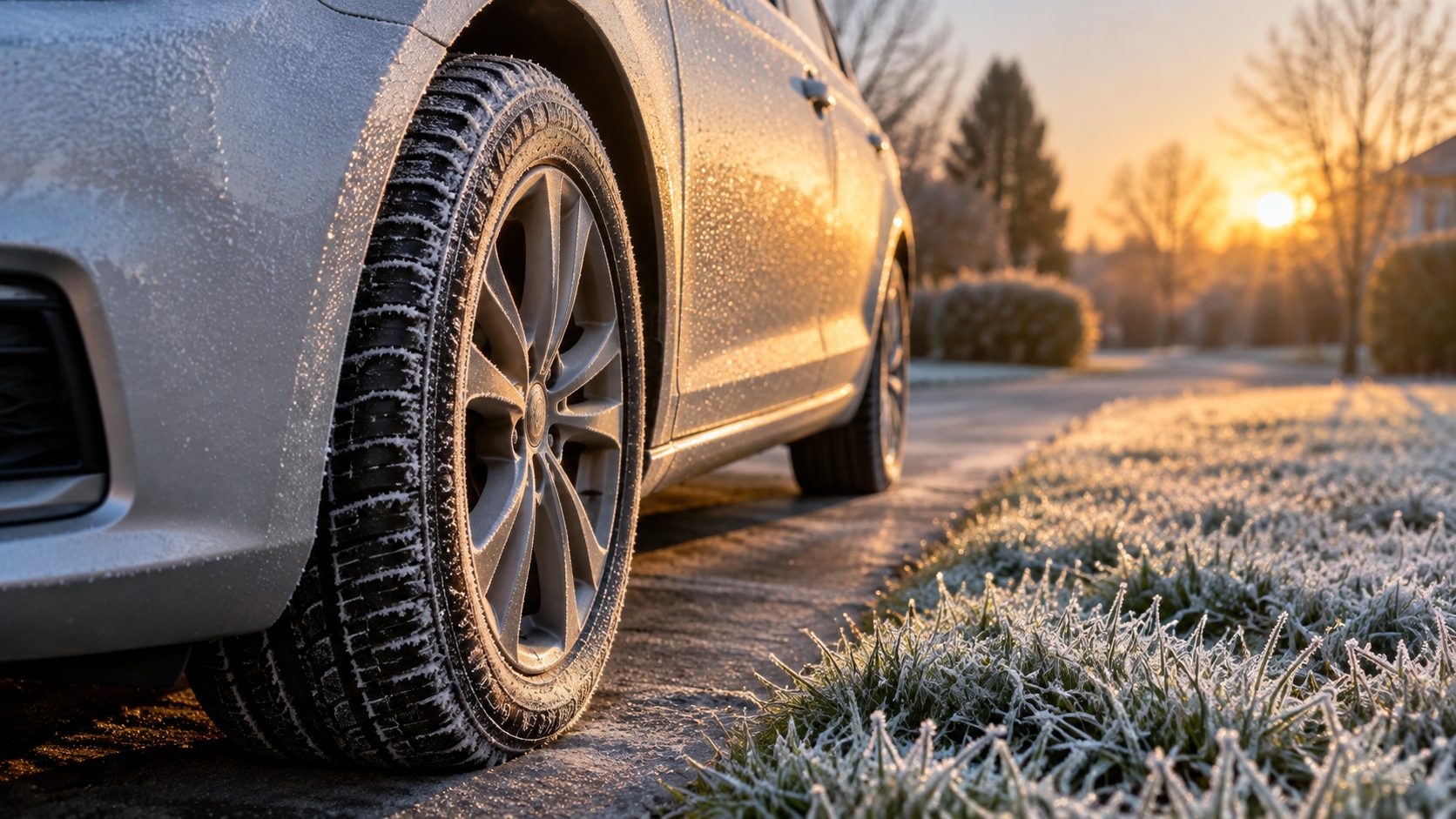
Tire pressure falls as air cools, about 1 psi (7 kPa) per 10°F (6°C) on GM’s rule of thumb. A 40°F overnight drop can cost about 4 psi (28 kPa, 0.28 bar), enough to tip a slightly low tire under the threshold.
GM’s bulletin calls this normal: on for a few minutes after a cold start, off once driving warms the tires. Never set pressure below placard, and set it for the coldest weather the car will see.
Still happening? For a week or two, log the outside temperature, each tire’s cold reading and whether the lamp came on. A tire that drops faster than the rest points to a slow leak.
If all four hold steady, suspect a sensor: REDI-Sensor says a weak battery can cause sporadic operation and extreme cold can stop one. Toyota adds packed snow or ice, chains, metallic window tint and radio interference near TV towers or airports.
TPMS Light Won’t Turn Off: FAQ
My TPMS light won’t turn off, but the tires are fine. Why?
Suspect a compact spare on the car, a low monitored spare, an inaccurate gauge, a warm baseline, a skipped calibration, or an unregistered or dead sensor.
Can I keep driving with the TPMS light on if the tires look fine?
Gauge them at the first safe stop: a low tire can look fine, and Toyota warns that a significantly under-inflated tire overheats and can fail. If the TPMS light won’t turn off with all four at placard, the system may miss a real leak, so gauge them every few days until it’s fixed.
Will a TPMS warning fail the MOT?
In Great Britain, a malfunctioning TPMS is a Major defect (a fail) on passenger cars first used from 1 January 2012. If your TPMS light won’t turn off only because a tire is low, that alone isn’t a fail, though an obviously under-inflated tire is a Minor defect. If the tester can’t tell low pressure from a fault, they add an advisory.
The Short Version: Gauge, Wait, Reset, Then Relearn
When the TPMS light won’t turn off, go in order: gauge every tire cold, drive, reset or calibrate as your manual says, then relearn the sensors, from the menu or with a shop’s tool. A lamp that returns only on cold mornings usually means a tire set slightly low.
More car fixes are in our Cars & Tech section.


Leave a comment