

TPMS Light vs Tire Pressure Light: What Each Lamp Means and What to Do
On most cars one lamp does two jobs: steady means a low tire, flash-then-steady means a TPMS fault. How to tell them apart and whether to keep driving.

The TPMS light vs tire pressure light question usually starts with an amber lamp and one worry: can I keep driving? On most current cars the tire pressure monitoring system (TPMS) uses one lamp for two jobs, and how it lights up tells you which.
On some older cars the TPMS light vs tire pressure light split is literal: two separate lamps. Designs, colors and timing vary by maker and market, so check your owner’s manual.
TPMS Light vs Tire Pressure Light: The Short Answer
The TPMS light vs tire pressure light difference comes down to what the lamp does. A steady tire symbol means low pressure: stop at the first safe place and check your tires. A symbol that flashes first, or a lamp reading TPMS, means a system fault: the car may not be watching your tires until it’s fixed.
Here’s the TPMS light vs tire pressure light comparison at a glance:
| What you see | Usual color | Meaning | What to do |
|---|---|---|---|
| Tire shape with “!”, lit steadily | Amber | One or more tires low | Pull over when safe, check tires |
| Same symbol, flashes for about a minute, then stays on | Amber | TPMS fault | Gauge all four tires, book a repair |
| The letters TPMS | Amber | TPMS fault | Same as above |
TPMS Light vs Tire Pressure Light Symbols and the Exclamation Point
What does the TPMS light look like? The chart below shows the TPMS light vs tire pressure light symbols side by side, plus the brake lamp that also uses an exclamation mark.
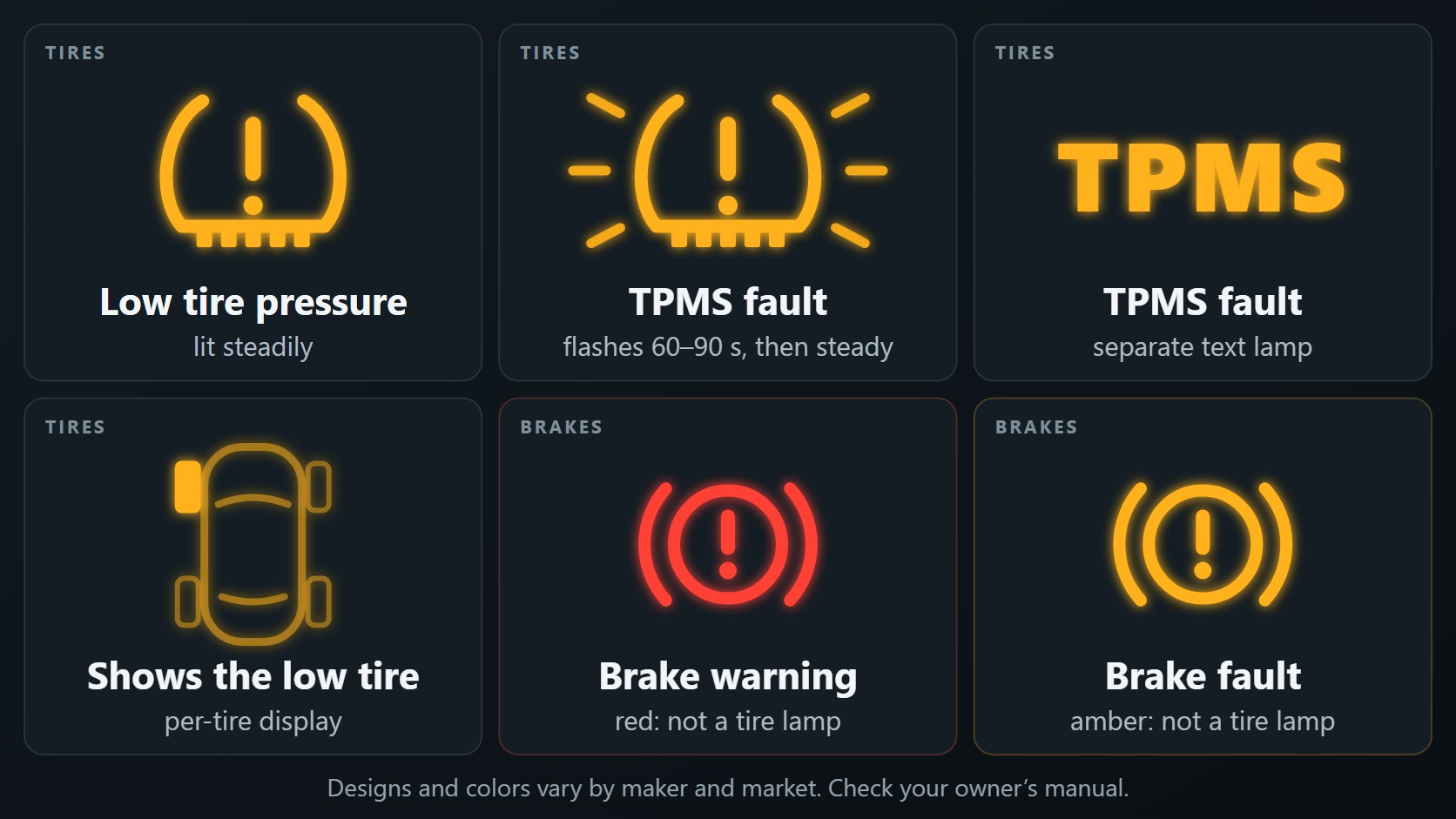
Horseshoe with “!”
A tire cross-section with “!” inside. On most newer cars it also flashes to signal a fault.
Car outline with tires
US rules allow a display that lights the specific tire that’s low.
The letters TPMS
A separate fault lamp on some, often older, cars. While it’s lit, a low tire may go undetected.
For TPMS light vs exclamation point mix-ups, ignore the color and check the shape. The tire lamp is open at the top with a flat, treaded bottom. The brake lamp is a closed circle with an arc on each side, like ( (!) ), or the word BRAKE. Red or amber, it’s a brake warning, not a tire one: stop safely if it’s red with the parking brake off, and get an amber one inspected.
Solid vs Flashing: The 90-Second Restart Test
In the US, FMVSS 138 allows two ways to show a TPMS fault: a separate lamp marked TPMS, or the low-pressure lamp flashing for 60 to 90 seconds, then staying lit, at every start until it’s fixed. On most cars, that flashing spell is the whole TPMS light vs tire pressure light distinction.
A few seconds of light at start-up is a normal bulb check. To settle the TPMS light vs tire pressure light question, use the check in Toyota’s Camry manual:
- Pull over safely and look at all four tires. If one is flat, stop: fit the spare or call for help.
- Switch the car off and on again, then watch the lamp for about 90 seconds.
- Steady: low pressure. Flashing, then steady: a fault. Off after the bulb check: no active warning, but still gauge all four tires; it came on for a reason.
Direct vs Indirect TPMS: Why Your Lamp Behaves This Way
Direct systems, like the Toyota Camry’s, have a pressure sensor in each wheel, usually on the valve stem. Indirect systems, like those in the Honda HR-V and 2026 CR-V, have no pressure sensors; they compare the rolling radius and rotation of each wheel.
The system type is behind most TPMS light vs tire pressure light confusion:
- Indirect systems need calibration. After adjusting pressure, rotating or replacing a tire, a 2026 CR-V owner sets the cold pressures, then starts calibration in P via Vehicle settings > TPMS calibration > Calibrate. It takes about 30 minutes of cumulative driving at 31 to 62 mph (50 to 100 km/h), never on the compact spare. Other models differ.
- They have blind spots. Honda’s doesn’t monitor at low speed, may warn late or not at all if a tire loses air rapidly, and mixed tire types or sizes can upset it.
- A compact spare may have no sensor. Toyota’s doesn’t, so the lamp stays on while it’s fitted.
Steady Tire Pressure Light: What to Do in Two Minutes
A steady lamp puts you on the low-pressure side of the TPMS light vs tire pressure light divide. Work through these in order:
Ease off and pull over safely
Avoid sudden steering and hard braking, as Toyota’s manual advises, and find a safe spot to stop.
Look at all four tires
Check for a flat, a bulge or a nail; a per-tire pressure display, if you have one, shows which is low. A visibly flat tire means no more driving: fit the spare or call for help.
Measure with a gauge
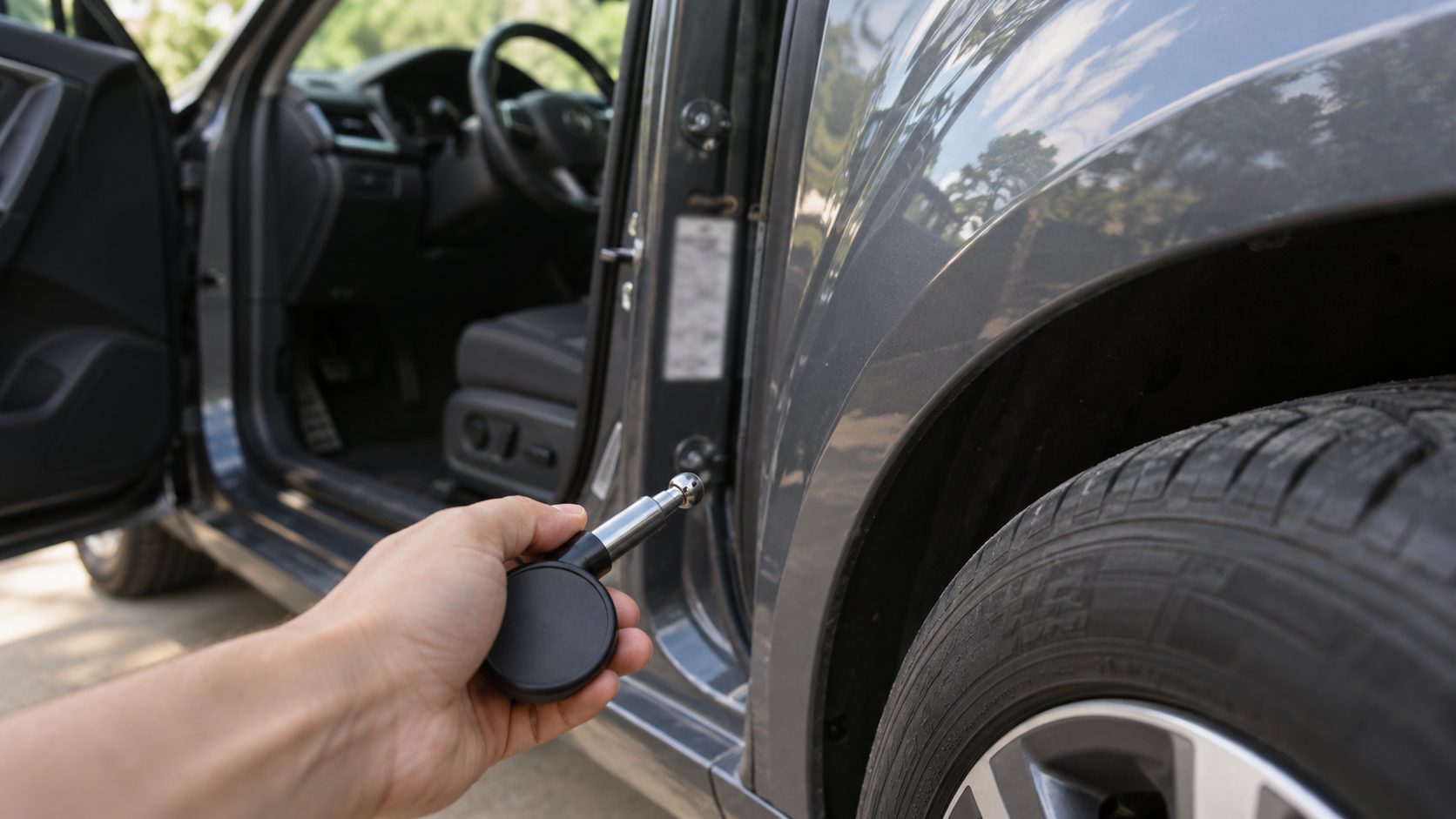
Michelin says measure cold: before driving, or at least three hours after. Warm tires read higher, so top up and recheck later; don’t let air out.
Inflate to the placard
Use the label in the driver’s door jamb or the owner’s manual, not the sidewall number.
Clear the lamp
Toyota’s goes off a few minutes after the fix; some cars need a reset, indirect ones a calibration. Still on? Toyota says you probably have a flat.
Flashing Light or TPMS Letters: What to Do in Two Minutes
A fault doesn’t mean a tire is low, but it removes your safety net: while it’s lit, the system may not detect low pressure. Don’t treat this half of the TPMS light vs tire pressure light pair as the harmless one.
- Gauge all four tires now, and keep checking them yourself until it’s repaired.
- Think about what changed: a compact spare, new wheels or tires, or puncture sealant, which some manuals say means a new sensor.
- Book an inspection. Toyota says immediately; Honda says have it checked by a dealer.
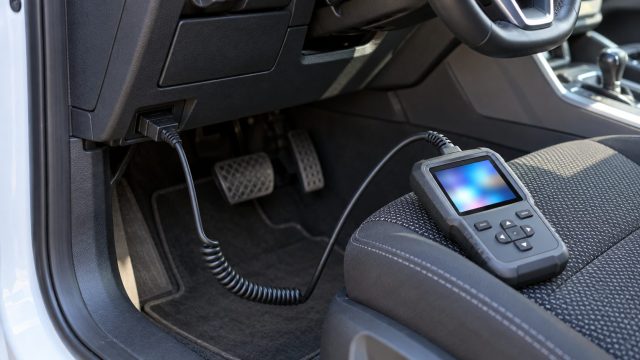
Not every code reader can read TPMS faults; if yours won’t even connect, see our guide to an OBD2 scanner not connecting.
At a UK MOT, a faulty TPMS is a Major defect on cars first used from 1 January 2012; a lamp lit by low pressure isn’t automatically a fail. EU rules have required TPMS on new passenger cars since November 2014.
Is It OK to Drive With the TPMS Light On?
Whatever the TPMS light vs tire pressure light answer, urgency depends on the tire, not just the lamp:
- Stop now: a visibly flat tire, a thump or pull, or a per-tire reading that keeps dropping. Toyota warns its system may not react at once to a blowout or sudden leak.
- As soon as you can: a steady lamp. Stop at the first safe place and look at all four tires. If none is flat, bulging or obviously low, drive slowly and briefly to the nearest air, then gauge and inflate to the placard. Honda warns a significantly underinflated tire can overheat and fail.
- Book it now: a fault lamp, once all four tires check out with a gauge; Toyota says have it inspected immediately. If a compact spare caused the flashing, keep to its speed and distance limits (on its label or in the manual) and get the regular tire repaired.
Under FMVSS 138, the US lamp only has to come on within 20 minutes of driving once a tire is 25% below placard pressure (or below the rule’s minimum activation pressure, if that’s higher). That’s a trigger point, not a target: a tire can be soft with the lamp still dark. Check every tire, including the spare, monthly.
TPMS Light vs Tire Pressure Light FAQ
Is the TPMS light the same as the low tire pressure light?
On most current cars, yes: steady means low pressure, flashing first means a fault. Cars with a TPMS letters lamp split the jobs, so the TPMS light vs tire pressure light test is which lamp is lit and whether it flashed.
Why does the light come on when it’s cold and go off after driving?
Cold lowers tire pressure; Continental’s rule of thumb is roughly 1 to 2 psi per 10°C (18°F) drop. Driving warms the tires and pressure climbs back, but they’re still near the limit, so top up to the placard while cold.
Why is the light still on after I filled or rotated my tires?
Indirect systems need calibration after inflating or rotating, some direct systems need a reset, and a flash at start-up means a fault, not pressure.
The Bottom Line: Read What the Lamp Does
Steady means low: stop, look, gauge and inflate to the door-jamb placard. Flashing first, or the TPMS letters, means a fault, so you do the watching until it’s fixed. Whatever the TPMS light vs tire pressure light verdict, a flat or fast-dropping tire means stop now.
More car fixes are in Cars & Tech, including what to do when Android Auto keeps stopping.


Leave a comment